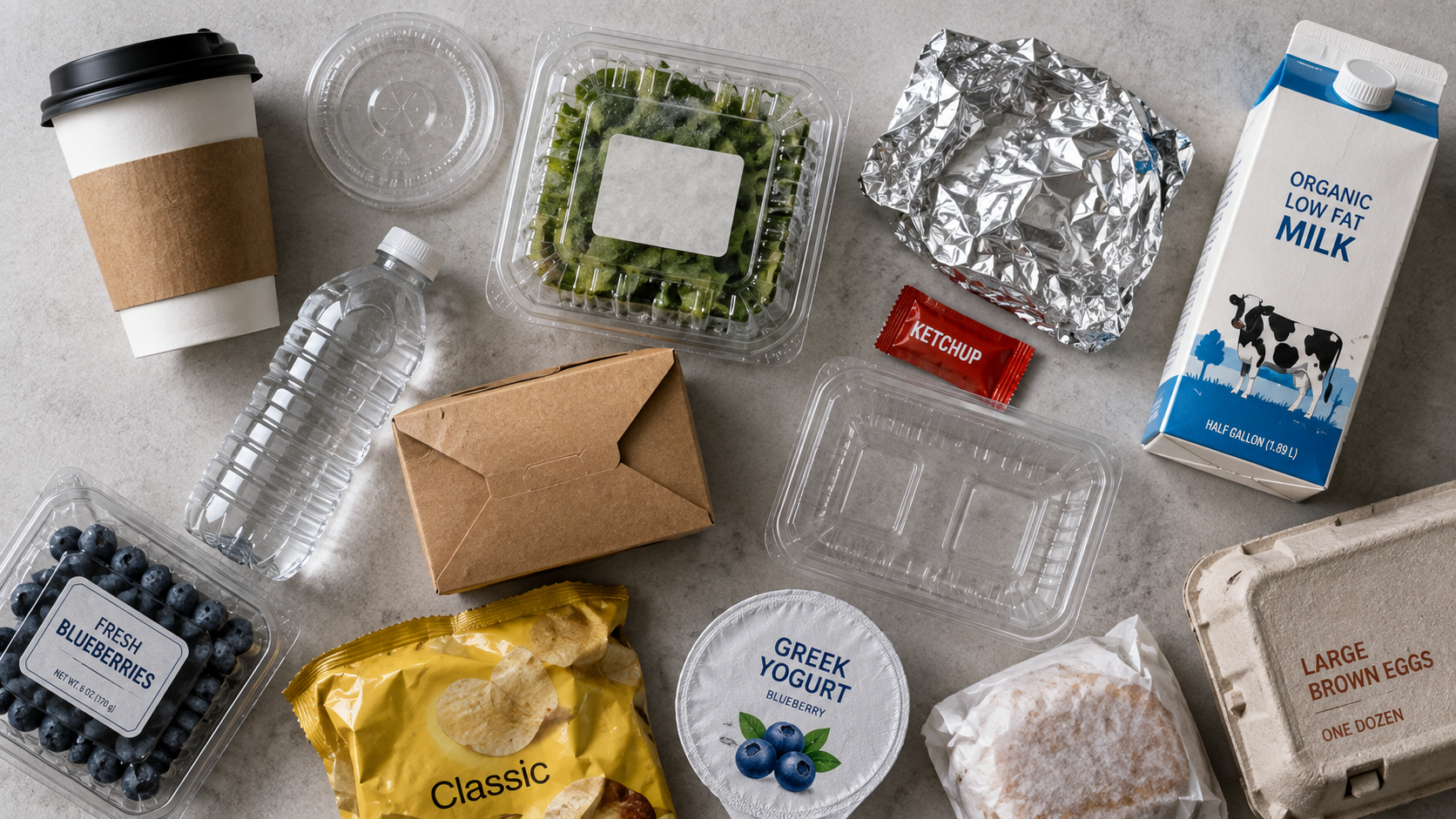
More than 15,000 chemicals are permitted for use in food contact materials in some jurisdiction. Packaging, can linings, processing equipment, the coating on the inside of a coffee cup. Of those, according to a paper in Environmental Science & Technology reported by the Food Packaging Forum, 87 percent lack sufficient safety data.
Eighty-seven percent. Not “have some gaps.” Insufficient data to say whether they’re safe at the exposures people actually get.
That’s not a scandal so much as a bookkeeping reality. Chemicals got approved decades ago under standards that no longer apply, or grandfathered in, or approved on the basis of low migration into food without much toxicity work. Nobody’s going to run full toxicology on 13,000 chemicals. There isn’t the money or the time. So the question becomes: which ones do you look at first?
What the researchers did
They used structural similarity. The idea is simple: chemicals with similar molecular structures tend to behave similarly in the body. If you know compound A is a problem, and compound B is structurally close to A, then B deserves a look before compound C, which looks nothing like either.
Applying that logic across the full list, they identified 38 priority groups containing 4,222 chemicals. The groups include the families you’d expect: phthalates (plasticizers, endocrine disruptors), PFAS (grease-proofing), organophosphates, isocyanates (used in adhesives and coatings), and primary aromatic amines (which can migrate from printed packaging and some are carcinogens).
They published the list as FCCprio and built an interactive screening tool called FCCgroup, both public.
Why “read-across” is the thing to understand
This grouping approach has a name in regulatory toxicology: read-across. You read the data from a well-studied chemical across to a poorly-studied structural relative. It’s how EPA is increasingly handling data-poor chemicals under TSCA, how the EU handles it under REACH, and how you’ll see it handled in any future regulation of the food-contact list. It’s not perfect; structure doesn’t always predict toxicity, and there are famous exceptions. But it’s the only method that scales to 15,000 compounds, and it’s a lot better than “nobody’s looked.”
If you’re studying for a certification, know the term. If you field supply-chain questions from clients about what’s in their packaging, this is the tool that lets you give a prioritized answer instead of a shrug.
One more thing about the number. “Lacks sufficient safety data” doesn’t mean “known to be harmful.” Most of the 13,000 are probably fine at the doses that migrate. The problem is the word “probably.” A regulatory system that permits a chemical to touch food should be able to say more than that, and for most of the list it can’t.
The consumer version
You can’t test your coffee cup lining at home and you shouldn’t try. What you can do is know the categories. Grease-resistant paper and cardboard (fast-food wrappers, microwave popcorn bags, some takeout containers) is where PFAS lives. Flexible plastics are where phthalates live. Heat plus fat plus plastic is the combination that drives migration. Glass and stainless don’t have this problem.
And you can use the tool. It’s free, it’s searchable, and it tells you which chemical families are in the priority groups. That’s more than most people had last month.
What we know
- 15,000+ chemicals permitted in food contact articles; 87% lack sufficient safety data, per the researchers.
- 38 priority groups containing 4,222 chemicals identified by structural similarity, including phthalates, PFAS, organophosphates, isocyanates, and primary aromatic amines.
- FCCprio list and FCCgroup tool released publicly. Published in Environmental Science & Technology; reported September 1, 2026.
What we don’t know yet
- How regulators will use the prioritization.
- Migration data (how much actually gets into food) for most of the priority groups.
Sources
Food Packaging Forum, September 1, 2026: https://foodpackagingforum.org/news/scientists-propose-approach-to-better-protect-consumers-from-chemicals-in-food-packaging
Corrections: If we got something wrong, tell us at kelly.sacredintel@gmail.com. We fix errors publicly and note the change here.