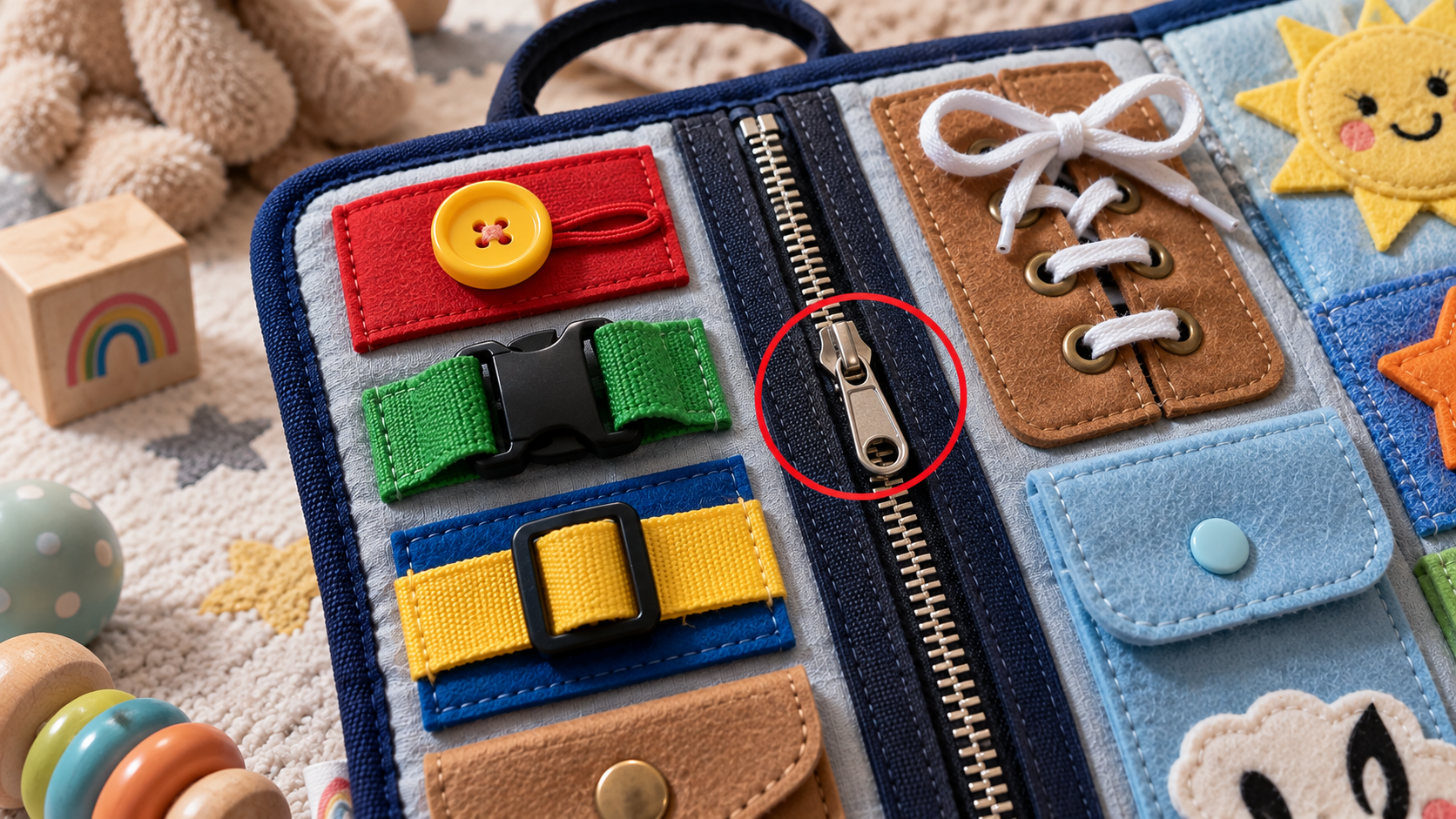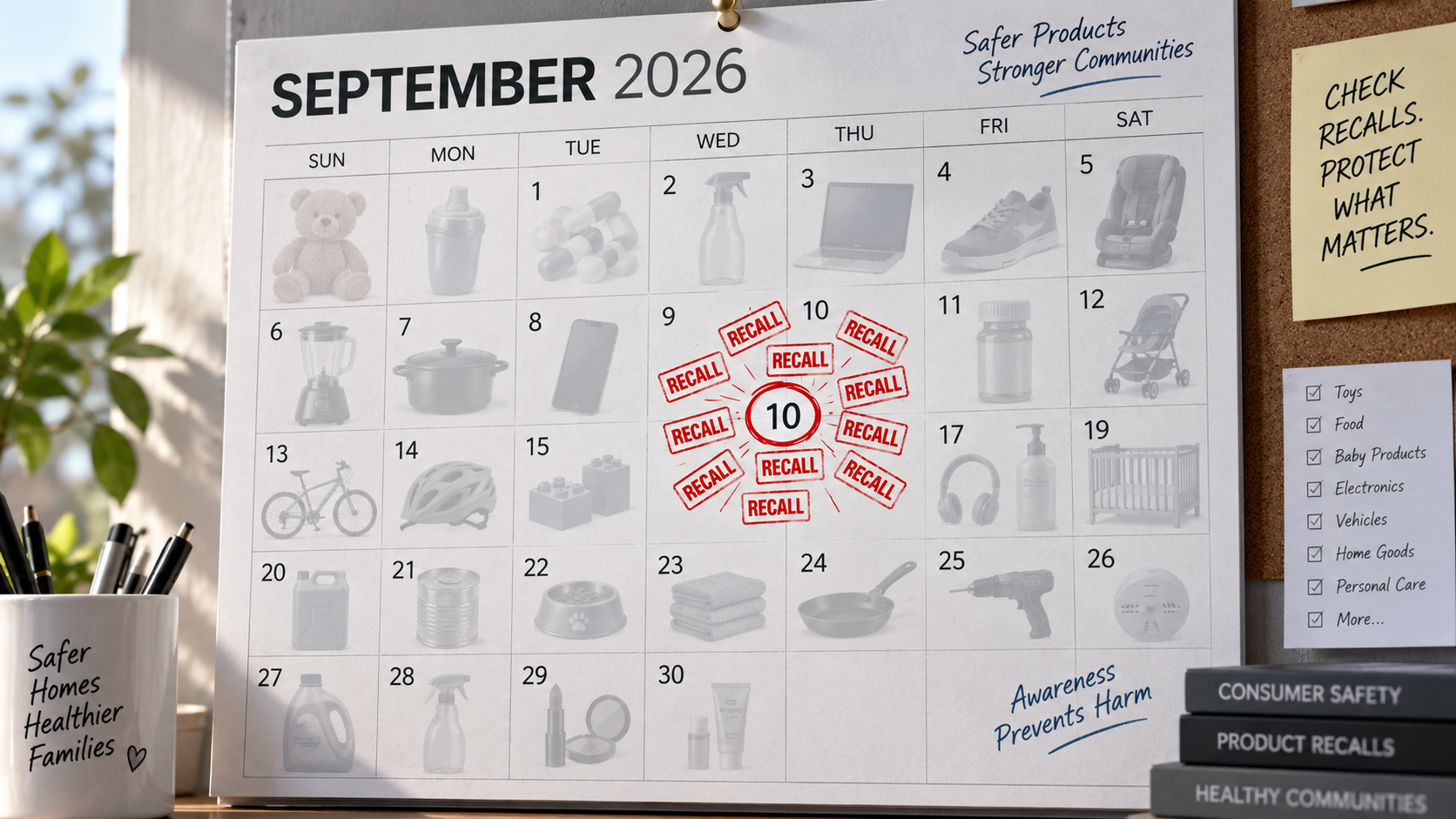
CPSC posted ten recalls on September 10. The lead busy board got its own piece. Here are the other nine, grouped by what the hazard actually is, because “recall” tells you nothing and “high-powered magnet ingestion” tells you everything.
Choking and ingestion
Ricky Joy Sour Crush candy bottles. 2.3 million units. The rolling ball applicator on top can detach. A candy product designed for kids with a small round part that comes off is the small-parts standard in its purest form. If you’ve got these in the pantry, they’re out.
Cade California finger light toys. Accessible button cell batteries. Here’s what a swallowed button battery does: it lodges in the esophagus, and the moisture completes a circuit. The battery starts generating hydroxide at the negative terminal, which burns through tissue. Serious injury in two hours. This isn’t a choking hazard; it’s a chemical burn from the inside. Federal law now requires battery compartments on kids’ products to need a tool or two independent motions to open. These didn’t.
SHEIN bear-shaped refrigerator magnets. High-powered magnets. If a kid swallows two, they attract each other through the intestinal wall and pinch off a section of gut. Perforation, sepsis, surgery. CPSC has been fighting this category for fifteen years. The magnets are cute. The surgery is not.
Fire
Sweet Cubby children’s loungewear. Fails the children’s sleepwear flammability standard. That standard exists because loose-fitting cotton sleepwear catches fire from a stovetop or a space heater faster than a kid can react. Sleepwear has to be either tight-fitting or flame-resistant; this was neither. The trick with this category is that “loungewear” gets marketed to skirt the sleepwear rule, and kids sleep in it anyway.
Prepared Hero fire spray canisters. The canisters can rupture. A fire suppression product that fails by rupturing is a product that fails at the exact moment you’re relying on it, in the exact place where a rupture is worst. Check the model, get the refund, and buy a real extinguisher with a UL mark.
Impact and crush
Victgoal bicycle helmets. Fail retention and stability testing. In plain terms, the helmet comes off or shifts in a crash. A helmet that moves on impact is a hat. The CPSC bike helmet standard tests exactly this, and a helmet sold in the U.S. is required to meet it. Marketplace helmets frequently don’t, and you can’t tell from the outside.
The two nobody would flag
AGA Rangemaster dual-fuel range. Missing gas test port cap. This is the one I’d want a residential client to know about, because nobody inspects their own stove. The gas test port is a fitting the installer uses to check pressure; it’s supposed to be capped after. No cap means a gas leak path, indoors, at the appliance. If you have this model, don’t wait for the smell.
And the loungewear, above, because “it’s not pajamas” is the reason the standard gets missed.
What to actually do
Check the CPSC recall page against anything in the house that came from a marketplace seller in the last two years. Not just toys: helmets, appliances, fire products.
Batteries: if a toy’s battery compartment opens without a screwdriver, and there’s a kid under six in the house, it’s not a kid’s toy.
Magnets: small, strong, and shiny means gone. There’s no supervised version of this.
Sleepwear: if it’s loose and cotton and the kid sleeps in it, treat it as sleepwear regardless of the label.
Keep a running log. If you do residential work, hand clients a monthly recall list with the ones that apply to their house. It’s a fifteen-minute value-add and it’s the thing they’ll remember.
What we know
- CPSC posted ten recalls on September 10, 2026, including: Ricky Joy Sour Crush candy bottles (2.3M units, detaching ball), Cade California finger lights (accessible button cells), SHEIN bear magnets (high-powered magnets), Sweet Cubby loungewear (sleepwear flammability), Prepared Hero fire spray (canister rupture), Victgoal bike helmets (retention/stability), AGA Rangemaster dual-fuel range (missing gas test port cap).
- Four of the ten are children’s products failing mandatory standards.
What we don’t know yet
Unit counts and injury reports for the individual recalls beyond the candy bottles; see each CPSC notice.
Sources
U.S. CPSC Recalls: https://www.cpsc.gov/Recalls
Corrections: If we got something wrong, tell us at kelly.sacredintel@gmail.com. We fix errors publicly and note the change here.