Disclosure: I run a company that sells home water testing kits, including for PFAS. This is about PFAS in private wells in my county. Noted, again.
Three things have come out since I wrote the East Hampton story on Monday, and each one makes it worse.
The distance. DEC now says the mixed runoff from the May 2023 battery storage fire, roughly a million gallons of water and about 4,900 pounds of Novec 1230, infiltrated the ground and migrated about 2,500 feet south to the Bridgehampton Wellfield. Half a mile, in three years, through sand. That’s the plume’s speed, and it tells you the map’s edges are wherever the last well was drilled.
The lawsuit. Suffolk County Water Authority has sued NextEra, National Grid, LG Chem, and LG Energy Solutions. That’s the plant operator, the utility, and the battery makers. The suit is the first formal move to name a responsible party, and it puts the fire-suppression design question in front of a court before DEC’s report is even out.
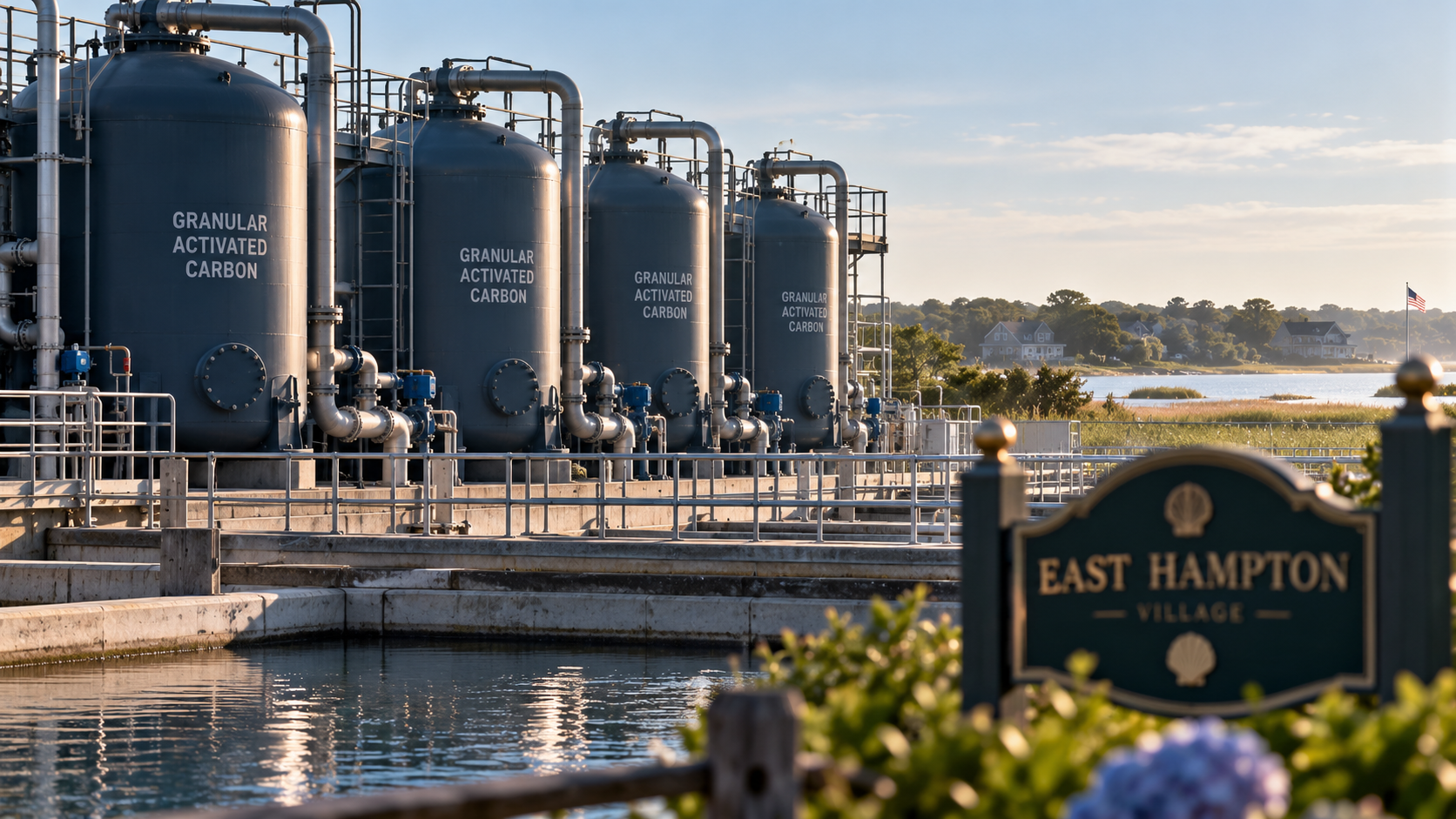
The filter. This is the one that matters if you’re on a private well nearby. Ultra-short-chain PFAS like PFPrA pass through standard granular activated carbon. GAC is what most home PFAS filters use, and it’s what Riverhead is installing on its public well with the state money I wrote about last week. It works well on the long-chain compounds, PFOA and PFOS. It works poorly on a three-carbon molecule, which slips through the carbon bed the way it slips through the Method 537.1 analyte list. A homeowner near Cove Hollow Road with a GAC filter under the sink and a clean 537.1 report has two pieces of reassurance that don’t apply to this contaminant.
The right analysis is a targeted short-chain panel by direct injection, or a total organofluorine method such as EPA 1621, which measures all the organic fluorine rather than a list of named compounds. Ask the lab for one of those by name.
One more thing, and it’s not local. Grid-scale battery storage now belongs on the environmental site assessment checklist next to dry cleaners and gas stations. If a Phase I doesn’t ask whether there’s a BESS within a half mile, it’s out of date as of this week.
What we know
- (new since September 14)
- DEC: contaminated runoff migrated ~2,500 feet south to the Bridgehampton Wellfield; two SCWA wells there offline.
- SCWA has sued NextEra, National Grid, LG Chem, and LG Energy Solutions.
- Ultra-short-chain PFAS such as PFPrA pass through standard GAC and are not captured by EPA Method 537.1. Targeted short-chain or total organofluorine (EPA 1621) analysis is required.
- DEC final report due fall 2026.
What we don’t know yet
- Whether any private well has exceeded the 3 ppb screening value.
- Which treatment technology, if any, SCWA will use for the affected wells.
Sources
- East End Beacon, September 14, 2026
- Earlier: 01-east-hampton-pfpra-novec-battery-fire-wells_2026-09-14
Corrections: If we got something wrong, tell us at kelly.sacredintel@gmail.com. We fix errors publicly and note the change here.