On September 14 and 15, EPA announced it is repealing the 2024 greenhouse gas emission standards for fossil-fuel power plants. Power plants are the second-largest source of U.S. emissions. Administrator Zeldin framed the repeal as a $310 billion savings and said “this is just the beginning.” The agency did not quantify the offsetting public health costs. The rules being repealed had been projected to avoid roughly $370 billion in pollution-related health costs. Environmental groups are preparing to sue.
I’m not going to argue climate policy here. It’s not what this publication does and you can get that argument anywhere. What I want to explain is why a rule about carbon dioxide, which is not toxic to breathe at ambient levels, matters to somebody who cares about what’s in their lungs.
The co-benefit mechanism
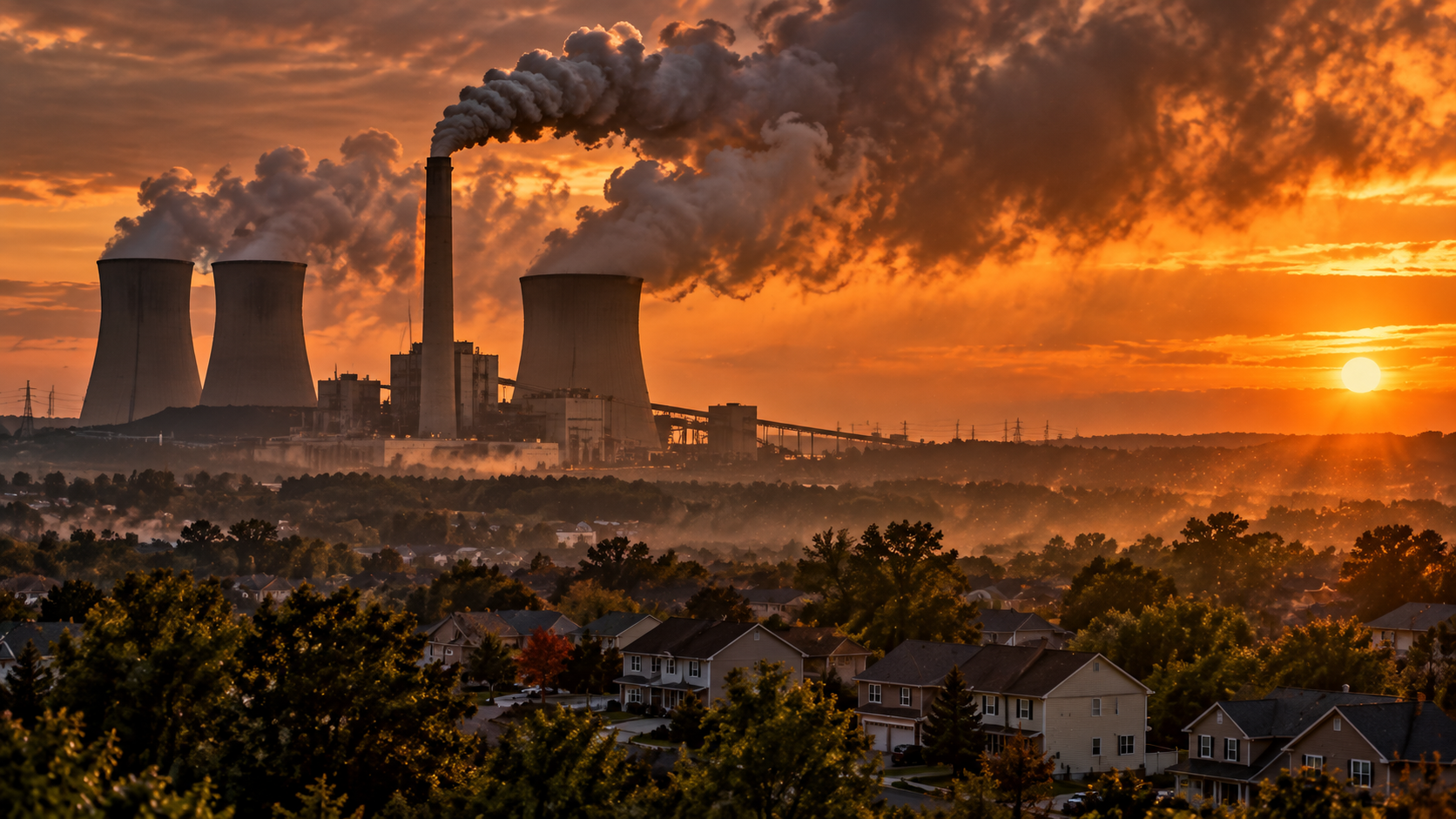
A power plant burning coal or gas emits carbon dioxide. It also emits sulfur dioxide, nitrogen oxides, and fine particulate matter, PM2.5, the stuff that goes deep into the lungs and into the blood. The carbon and the particulate come out of the same stack, from the same combustion.
When a rule limits carbon from a plant, the plant has a few options: run less, switch fuels, add capture equipment, or retire the unit. Every one of those also cuts the particulate and its precursors, because you can’t burn less coal for the carbon without burning less coal for the soot. Regulators call this a co-benefit. The health savings the rule was projected to deliver were almost entirely co-benefit: fewer asthma attacks, fewer heart attacks, fewer premature deaths from PM2.5, not from CO2.
Repeal the carbon rule, and the co-benefit goes with it. Plants that would have run less will run more. The particulate that would have stayed in the ground goes up the stack.
Why “downwind” means here
Sulfur dioxide and nitrogen oxides don’t stay where they’re emitted. In the atmosphere they react and form secondary particulate, and that particulate rides the prevailing westerlies. The Ohio Valley’s coal and gas fleet sits upwind of the entire Northeast corridor. On a summer day with the right wind, a meaningful share of the PM2.5 over Long Island came from a plant in Ohio or Pennsylvania. This is well-documented; it’s the reason there’s an interstate transport provision in the Clean Air Act and the reason New York has spent decades suing upwind states.
So the practical expectation, per the analysts quoted in the coverage, is higher PM2.5 downwind of coal and gas units. Downwind includes us.
What I’d actually do with this
For anyone who manages indoor air, in a school, a healthcare facility, a home with someone who has lung disease: outdoor PM2.5 is the main driver of indoor PM2.5 in a building without filtration. If the outdoor number trends up, the indoor number trends up. A baseline indoor particulate measurement now, before any change, is the thing that lets you see it. Last week’s pulmonary fibrosis study put a number on the same-day effect of a 5-microgram swing. This is one of the ways that swing could arrive.
For everyone else: the AQI is public, it’s free, and it’s the monitor you still have when the federal ones come down. Watch it.
What we know
- EPA announced repeal of the 2024 GHG emission standards for fossil-fuel power plants, September 14–15, 2026.
- Administrator Zeldin cited $310 billion in savings; EPA did not quantify public health costs. The repealed rules had been projected to avoid ~$370 billion in pollution-related health costs.
- Analysts expect higher PM2.5 downwind of coal and gas units. Legal challenges are expected.
What we don’t know yet
- The Federal Register notice’s effective date and any accompanying changes to particulate co-benefit controls.
- Quantified PM2.5 impact for the Northeast.
Sources
Corrections: If we got something wrong, tell us at kelly.sacredintel@gmail.com. We fix errors publicly and note the change here.